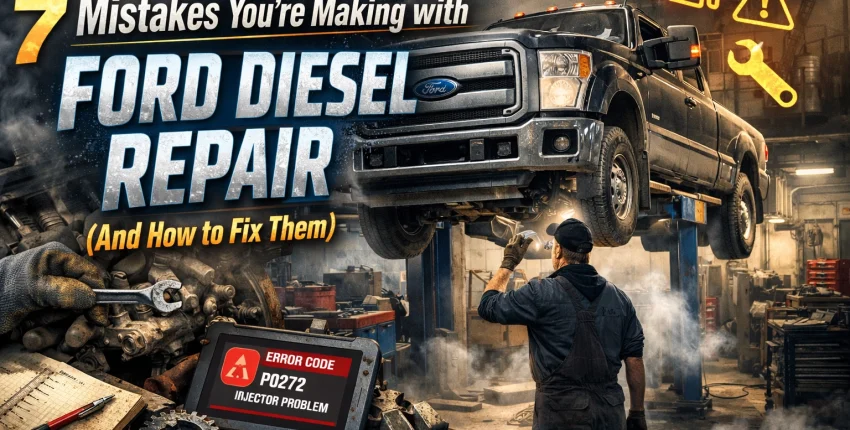
If you drive a Ford Power Stroke, you know that “Built Ford Tough” isn’t just a marketing slogan: it’s a lifestyle. Whether you’re hauling heavy equipment across Texas, heading out for a weekend at the lake, or relying on your Super Duty for the daily grind in Mason, these trucks are designed to work hard. However, that legendary power comes with a trade-off: diesel engines are complex beasts that require specific care.
At Mason Truck Accessories, we see a lot of Fords come through our shop. While many owners are diligent, it’s easy to fall into habits that seem harmless but actually shorten the life of your engine. When it comes to Ford diesel repair, the difference between a minor maintenance bill and a $10,000 engine overhaul often comes down to avoiding a few common pitfalls.
Let’s look at the seven most common mistakes Ford diesel owners make and, more importantly, how you can fix them before they leave you stranded on the side of the road.
1. Skipping Fuel Filter Changes
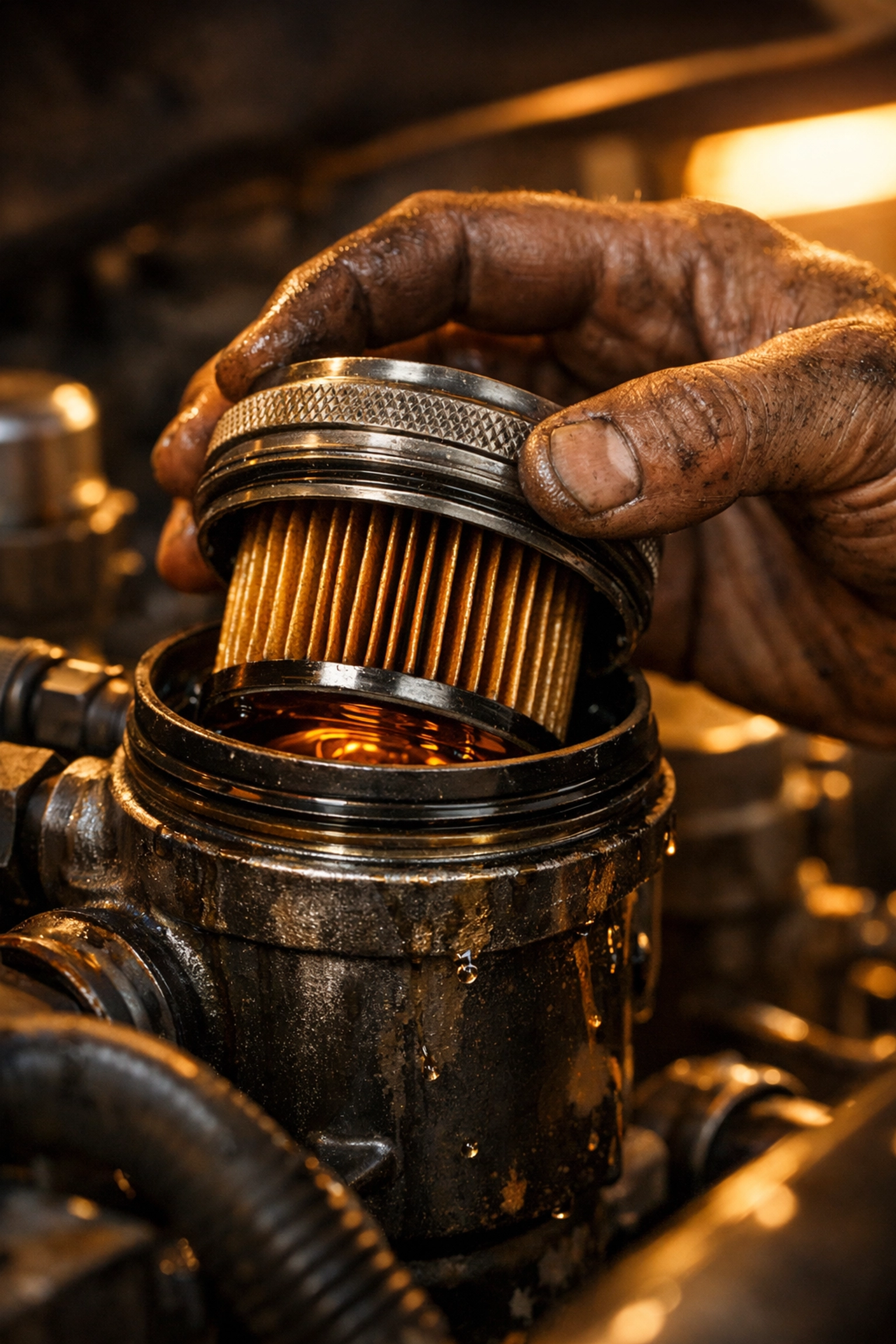
Your Ford diesel engine: especially the newer 6.7L Power Stroke: relies on an incredibly high-pressure fuel system. To keep things moving, Ford uses a dual-filter setup. A common mistake we see is owners changing the primary filter but ignoring the secondary one, or simply waiting too long between changes.
The Risk:
Contaminated fuel is the number one enemy of your injectors and the high-pressure fuel pump (the CP4 pump in particular). If that pump fails due to debris or water, it can send metal shards through your entire fuel system. We call this “the glitter of death,” and it’s a repair that can easily top five figures.
How to Fix It:
- Stick to the Schedule: Change both fuel filters every 15,000 miles, or every other oil change. If you do a lot of heavy towing or idle frequently, consider doing it even sooner.
- Drain the Water Separator: Check your water separator monthly. Texas humidity and varying fuel quality at different stations mean water in the fuel is a real threat.
- Use OEM Filters: Stick with Motorcraft filters. Aftermarket filters sometimes don’t fit quite right, allowing unfiltered fuel to bypass the media.
2. Using Low-Quality Fluids
It’s tempting to grab whatever oil or coolant is on sale at the big-box store, but your Power Stroke is picky. Diesel oil needs to handle high heat and heavy soot loads, and the cooling system in a Ford diesel is far more complex than a standard gas engine.
The Risk:
Using the wrong oil can lead to “stiction” in the injectors (common in the 6.0L) or premature wear on the turbo bearings. Using the wrong coolant can lead to cavitation: tiny bubbles that essentially “sandblast” the inside of your engine block and front cover.
How to Fix It:
- Check the Specs: Always ensure your oil meets the Ford WSS-M2C171-F1 specification.
- Coolant Matters: Do not mix green, orange, and yellow coolants. If your truck calls for Motorcraft Gold or the newer Yellow, stick to it. Mixing them can create a “gel” that clogs your oil cooler.
- Trust the Pros: If you’re unsure what your specific year model needs, our team at Mason Truck Accessories can help you identify the exact fluids required for your VIN.
3. Ignoring Cooling System Issues
The cooling system on a Ford diesel doesn’t just keep the engine block from melting; it also cools your EGR (Exhaust Gas Recirculation) system and your engine oil. If the cooling system is neglected, it triggers a domino effect of failures.
The Real-World Scenario:
Imagine you’re hauling a heavy trailer up a grade on a hot July afternoon. Your temperature gauge looks okay, but your oil cooler is actually clogging up. The oil gets too hot, loses its lubricating properties, and suddenly your turbo is failing.
How to Fix It:
- Monitor Deltas: If you have a monitor (like an Edge Insight), watch the difference (delta) between your Engine Oil Temperature (EOT) and Engine Coolant Temperature (ECT). A difference of more than 15 degrees usually means your oil cooler is starting to clog.
- Flush Regularly: Don’t wait for a leak to service the system. A professional flush every 50,000 to 70,000 miles can prevent the buildup of silicate dropout.
- Upgrade Components: Consider high-quality upgrades for failure-prone parts like the cold-side charge pipe. You can learn more about how these upgrades help in our guide on the best truck accessories for work trucks.
4. Not Checking the FICM (Fuel Injection Control Module)
This one is specifically for the 6.0L Power Stroke owners out there. The FICM is the “brain” that tells your injectors when and how much fuel to spray. It’s a common failure point that is often misdiagnosed as bad injectors.
The Risk:
A failing FICM usually starts with low voltage. When the voltage drops, it strains the injectors. If you ignore a struggling FICM, you’ll eventually find yourself replacing eight expensive injectors instead of one electronic module.
How to Fix It:
- Test Your Voltage: Using a multimeter or a digital monitor, ensure your FICM stays at 48 volts. If it drops to 45 or lower (especially during a cold start), it’s time for a repair or replacement.
- Healthy Batteries: Since the FICM relies on the truck’s electrical system, keeping your batteries in top shape is crucial. For more on winter battery health, check out our post on keeping your truck running in winter.
5. Delaying EGR Valve Service
The EGR system is designed to reduce emissions, but it’s notorious for getting “sooted up.” Carbon buildup from diesel exhaust can cause the valve to stick, leading to poor fuel economy, black smoke, and a “limp mode” that ruins your workday.
The Risk:
A stuck EGR valve can eventually lead to a ruptured EGR cooler. When the cooler fails, it can leak coolant into the intake, leading to white smoke or even hydrolocking the engine (which is as bad as it sounds).
How to Fix It:
- Clean It: If you notice your truck feels a bit sluggish, removing and cleaning the EGR valve with specialized cleaner can often save it.
- Drive It Hard: Diesels don’t like short trips around town. “Working” the truck helps keep the exhaust temperatures high enough to burn off some of that soot naturally.
- Professional Inspection: During your routine automotive repair services in Mason, TX, ask your technician to check the soot levels in your intake system.
6. Neglecting the Battery and Electrical System
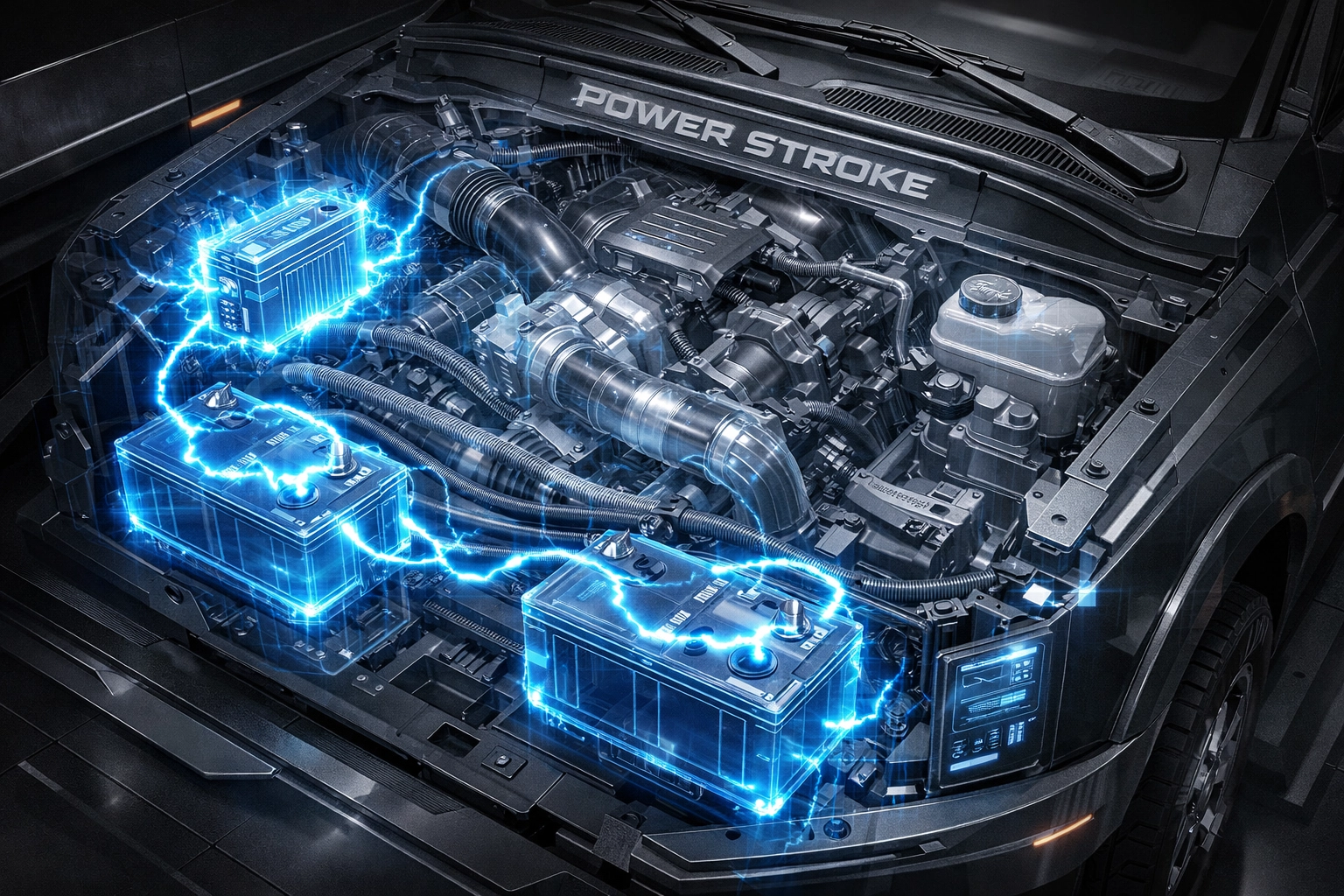
Most gas trucks can limp along with a weak battery. A Ford diesel cannot. These trucks use two batteries for a reason: they need immense “cranking amps” to turn over a high-compression engine and massive amounts of steady voltage to run the sensitive electronics.
The Risk:
Low voltage causes “noise” in the electrical system, which can fry sensors and modules. It also leads to slow cranking, which puts unnecessary wear on your starter.
How to Fix It:
- Replace in Pairs: Always replace both batteries at the same time. If you put one new battery in with one old, weak battery, the old one will pull the new one down to its level within months.
- Clean Your Terminals: Corroded terminals create resistance. A quick cleaning with a wire brush and some terminal protectant goes a long way.
7. DIY-ing Without Proper Diagnostics
We love the DIY spirit at Mason Truck Accessories, but modern Ford diesels are essentially rolling computers. One of the biggest mistakes we see is the “parts cannon”: where an owner starts replacing expensive parts (injectors, turbos, sensors) hoping one of them fixes the issue.
The Risk:
You can easily spend $2,000 on parts and still have a truck that won’t start because the actual issue was a $50 wiring harness or a simple sensor failure.
How to Fix It:
- Invest in Better Tools: A basic code reader from the local parts store often won’t see manufacturer-specific diesel codes. Consider software like FORScan or a dedicated diesel monitor.
- Get a Professional Diagnosis: Sometimes, the smartest DIY move is paying for one hour of professional diesel engine diagnostics. We use advanced scanning equipment to pinpoint the exact failure, saving you time and money in the long run.
- Consult the Experts: Before you buy that expensive new turbo, talk to us. We’ve seen it all and can help you figure out if you really need a replacement or just a simple repair.

Why Longevity is the Goal
Owning a Ford diesel is an investment. Whether it’s for work or play, you rely on that truck to be there when you turn the key. By avoiding these seven common mistakes, you aren’t just saving money on repairs; you’re ensuring your truck stays reliable for 300,000 miles and beyond.
At Mason Truck Accessories, we’re more than just a shop: we’re your partners in keeping your rig on the road. From routine maintenance to complex auto repair in Mason, TX, we treat every truck like it’s our own.
If your Power Stroke is acting up, or if you just want to make sure you’re staying ahead of the maintenance curve, come see us! We’re always happy to chat trucks and help you find the best solutions for your specific needs.
Ready to get your Ford back in peak condition?
Contact us today to schedule a diagnostic or visit our about us page to learn more about our commitment to the Mason community. Let’s keep those Fords running strong!